Member Spotlights
One of the key reasons CAPA has grown and thrived over the past 50 years is our members. This page is dedicated to CAPA members, past and present, who have contributed to the evolution of CAPA and helped bring so many successes to fruition.
Want to be featured? Share your story →
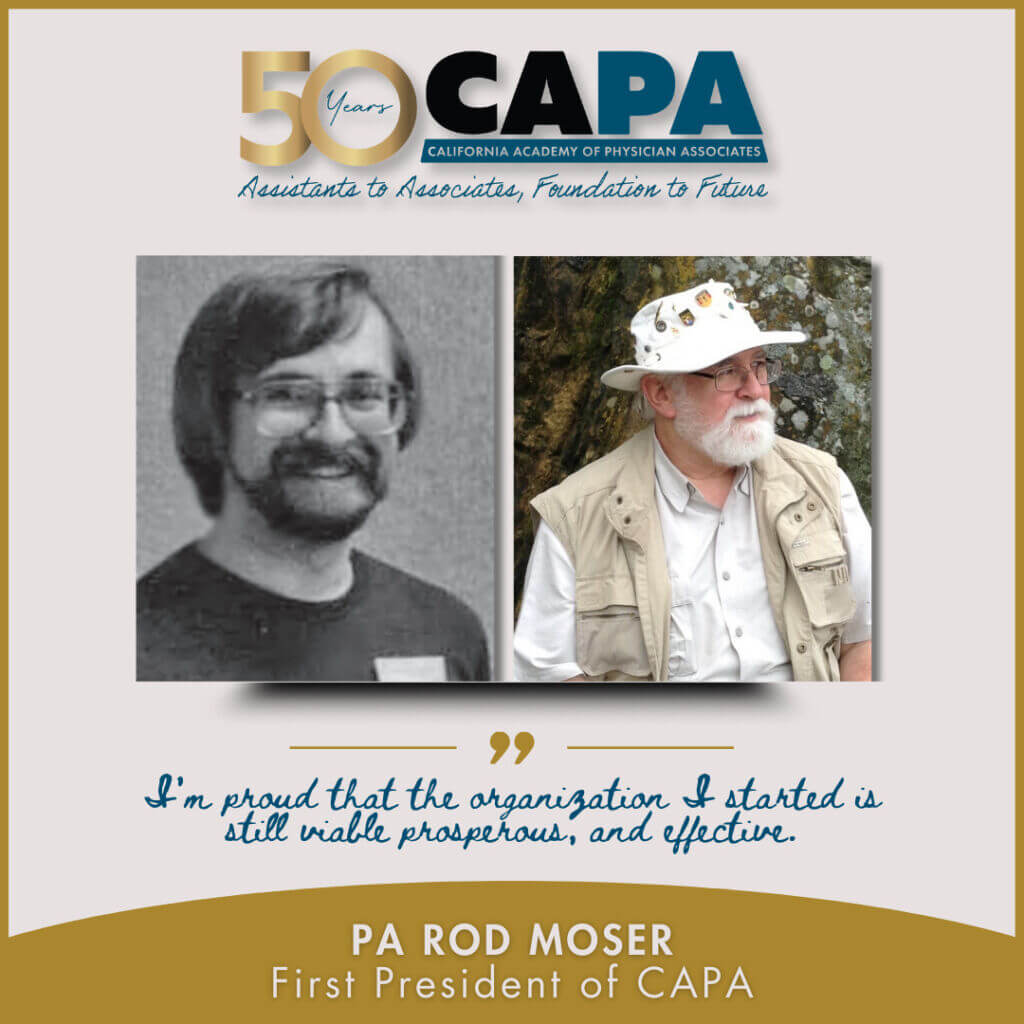
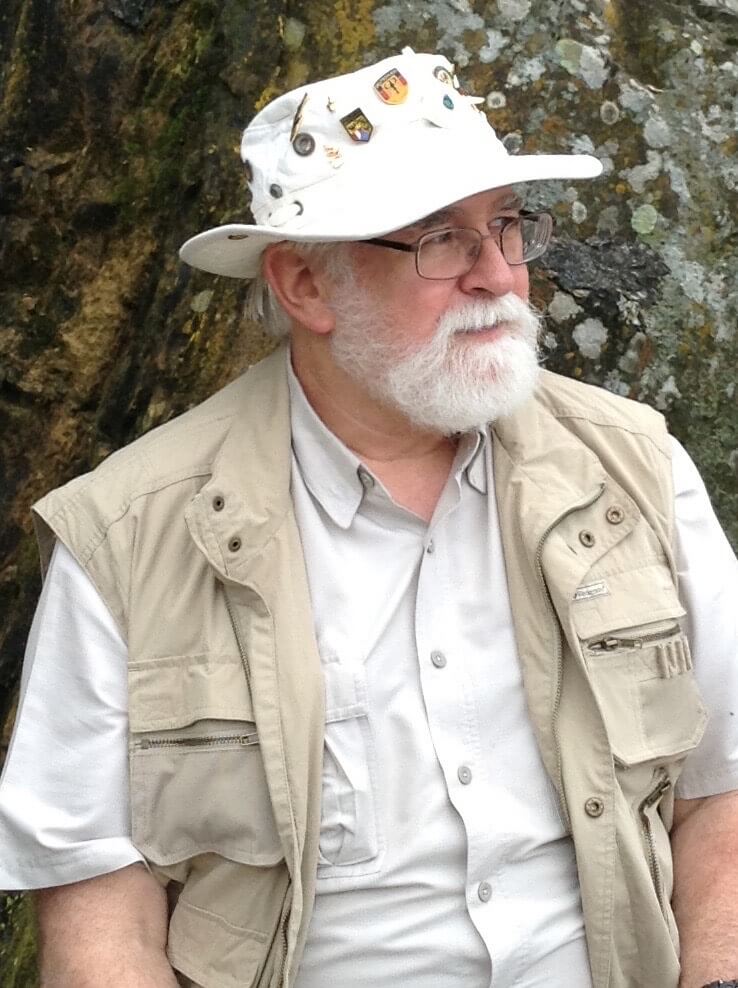
A Tribute to Rod Moser
First President, California Academy of Physician Associates
Pre-PA Journey
Rod Moser’s story is inseparable from the story of the physician associate profession itself, especially in California. His leadership did not begin from a place of privilege or established pathways, but from courage, determination, and a belief in a profession that had not yet been formally recognized.
In 1969, at just 18 years old, Rod entered one of the nation’s earliest four-year baccalaureate PA programs at Alderson-Broaddus College in Philippi, West Virginia. He came directly out of high school, from an impoverished Appalachian background, with no prior medical experience.
“When Rod graduated in 1973, the profession faced an uncertain future. No states had enabling legislation authorizing PAs to practice yet.”
Although accepted into a pre-medical program at the University of Pittsburgh, Rod chose Alderson-Broaddus after receiving a full scholarship, an economic decision that would ultimately place him at the forefront of a new medical profession. He first learned of the PA program through a recruitment letter sent to his high school guidance office, a small spark that would ignite a lifetime of impact.
One of the First 100 California PAs
When Rod graduated in 1973, the profession faced an uncertain future. No states had enabling legislation authorizing PAs to practice yet. Despite this, Rod accepted a position in San Francisco, took the first NCCPA board examinations, and practiced quietly, like many early PAs, while California slowly moved toward recognizing physician associates as a legitimate profession.
At the time, there were fewer than 100 PAs in California, and locating them was nearly impossible. The state would not release their names, and many PAs intentionally kept a low profile. As a member of the American Academy of Physician Associates (AAPA), Rod volunteered to organize a California state chapter. For nearly a year, he tracked down fellow PAs by contacting their supervising physicians, gradually building a network of professionals who shared the same challenges and hopes.
|
1965
First PA program established at Duke University.
|
1970
California formally recognizes the Physician Assistant profession in state law.
|
1975
California’s Physician Assistant Practice Act is enacted, establishing the legal framework for regulation.
|
1976
California issues its first Physician Assistant licenses.
|
CAPA is Born
That effort culminated in a pivotal meeting in 1976 in Fresno, chosen for its central location. Approximately 50 to 60 PAs attended, becoming “members for a day” so the group could vote on officers, approve bylaws, adopt articles of incorporation, and establish a formal charter with the AAPA. There was no formal “first” meeting—only resolve and momentum. By a simple show of hands, Rod Moser became the first president of what would become the California Academy of Physician Associates. Annual dues were $20, and if you paid, you were an official member.
“All PAs should be joining their PA society if they aren’t already.”
Rod often said his greatest achievement was simply getting the ball rolling, but that modest assessment belies the magnitude of his contribution. At a time when California seemed reluctant to acknowledge the profession, Rod helped ensure that PAs would be recognized, licensed, and properly represented. His early leadership laid the groundwork for advocacy, legitimacy, and growth that future generations would build upon.
Rod also witnessed, and helped enable, the evolution of the profession itself. He saw physician associates grow from highly trained technicians constrained by rigid regulations and long lists of approved tasks into true medical professionals trusted for their knowledge, judgment, and patient care.
Above all, Rod believes that a PA license is a hard-earned and deeply cherished privilege. He consistently emphasizes the responsibility that comes with it: to follow the law, adhere to one’s scope of practice, know one’s limitations, practice with honesty and ethical integrity, and get involved in state and national organizations.
We honor Rod Moser not only as the first president of the California Academy of Physician Associates, but as a pioneer whose perseverance and quiet leadership helped transform a fledgling idea into a respected profession. His legacy continues through every PA who practices with professionalism, humility, and commitment to patients.
Sonny Cline
M.A., M.DIV., PA-C
CAPA President